TECHNOLOGY
Fraunhofer’s One Stack That Does It All
Fraunhofer IKTS wins Germany’s top applied research prize for a reversible solid oxide stack that functions as both fuel cell and electrolyser.
17 Jun 2026
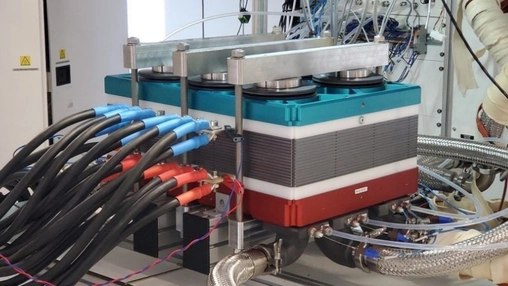
Most hydrogen researchers build either an electrolyser or a fuel cell. Fraunhofer IKTS built one system that does both, and in June 2026 the researchers behind it received Germany’s highest applied science distinction for the effort.
Mihails Kusnezoff, Stefan Megel, and Sindy Mosch at the Fraunhofer Institute for Ceramic Technologies and Systems spent two decades developing a high-temperature solid oxide stack that generates hydrogen, operates as a fuel cell, and is designed from the outset for industrial-scale production. Bridging those requirements within a single architecture meant coordinated innovation across materials science, microstructure design, thermal management, and protective layer chemistry. The Joseph von Fraunhofer Prize, awarded in June 2026, recognised that achievement.
Reliable performance between 750 and 850 degrees Celsius makes the stack suited to industrial sites where waste heat is available. Using that heat as an energy input cuts electricity consumption, accelerates electrochemical reactions, and raises overall system efficiency considerably. Beyond hydrogen, the stack can convert water vapour and CO2 into synthesis gas, and accept natural gas, biogas, methanol, ethanol, or green ammonia in fuel cell mode.
Scale-up followed swiftly. Thyssenkrupp nucera identified the Fraunhofer IKTS stack as a particularly efficient solution for high-temperature electrolysis and partnered with the institute to establish a partially automated pilot production line in Arnstadt, Thuringia. That facility became operational within 14 months of the collaboration beginning, reflecting both technical readiness and an early emphasis on manufacturability.
Gigawatt-scale production is the stated ambition. Germany’s position as a hydrogen technology leader depends on exactly this kind of transition from laboratory precision to industrial output, and the Fraunhofer IKTS work offers one of the clearest recent examples of what that path can look like.
Related News


SUBSCRIBE FOR UPDATES
By submitting, you agree to receive email communications from the event organizers, including upcoming promotions and discounted tickets, news, and access to related events.